
Quick Update
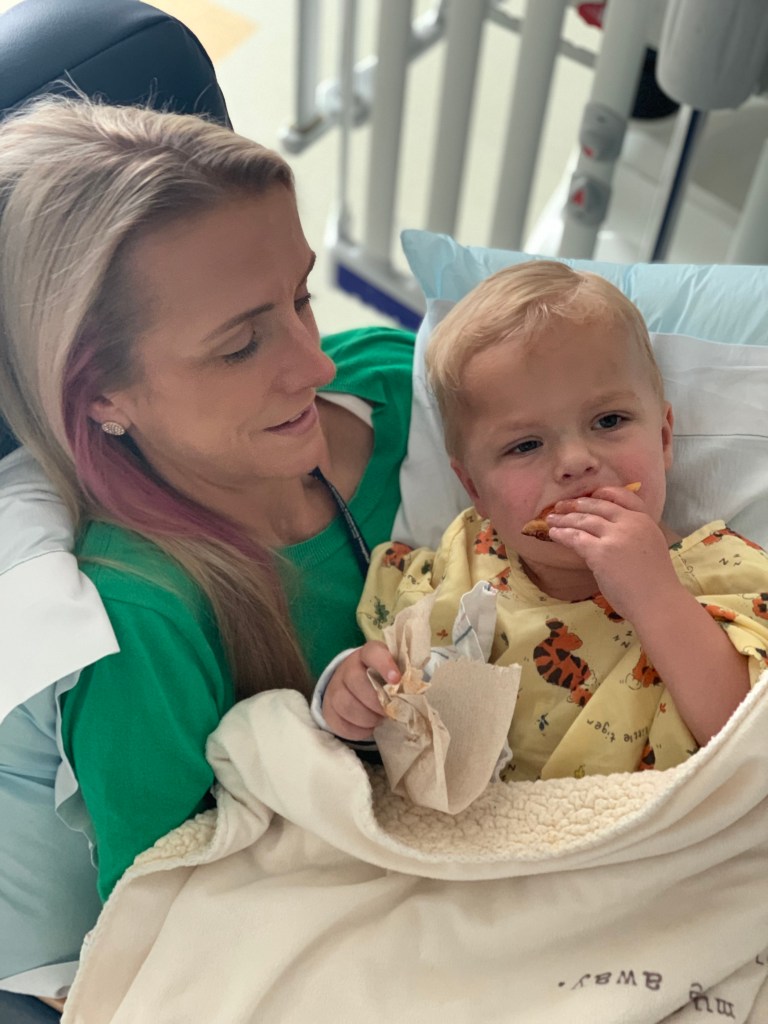
Theo is doing very well and although it’s not a race, in many ways he is progressing ahead of schedule. He’s still in the ICU but we’re hoping he’ll be moved to the inpatient floor later today. Next stop from there would be home — most likely sometime in the middle of next week. All things considered we couldn’t be more amazed with and proud of his resilience.
We had a chance to talk to his doctors in depth yesterday about the Fontan procedure and what the future could look like for Theo, and I’ll try to explain that here in the simple terms that I was able to understand. Warning: I’m not a doctor, so consult your local pediatric cardiologist before sharing the contents of this post; I am however a lawyer, so you get a disclaimer.
The Fontan and Theo’s Outlook
Starting with the takeaway up front, if all continues to go well, Theo shouldn’t need another intervention for decades — most likely somewhere between 20 and 40 years. His new circulation will likely, however, take a bit of a toll on his body over the long run. The current setup probably isn’t sustainable for the duration of his lifetime, but until another intervention is needed he will generally look and feel like the next healthy child.
Now, to get a little nerdier and more specific.
To refresh from some earlier posts, in normal circulation “blue blood” (blood without oxygen that is traveling from the body to the lungs to re-up) flows through the heart, where it’s pumped to the lungs to get oxygen. “Red blood” (blood with oxygen that flows from the lungs to the rest of the body) similarly flows through the heart, where it’s pumped to the body to deliver oxygen to muscles and tissue. Typical circulation keeps blue blood and red blood separate in the heart (blue blood going through the right side and red blood going through the left) and in our blood vessels (blue blood traveling through veins and red blood through arteries).
I promise this is relevant to Theo, I don’t simply enjoy writing about high school biology lessons…
So in all of us, including Theo, our bodies are constantly pushing blood out from the lungs to the body and pulling it back in from the body to the lungs. The reason this is relevant to Theo is two fold. First, he only has one ventricle to pump blood through his heart, so if that ventricle was used to pump both blue and red blood, the two would mix together and the oxygen level in that “purple blood” wouldn’t be sufficient to fuel his body. Second, our bodies rely on a difference in pressure between the system that pushes blood out and the one that pulls it back in. A normal heart helps maintain that pressure differential because it pumps blood in both directions.
After the Fontan, the one ventricle Theo has is now used to pump only red blood from the lungs to the body. The veins that typically bring blue blood back from the body, through the heart, and to the lungs were disconnected from Theo’s heart and reconnected to his pulmonary artery. Those veins now take blue blood directly from the body straight to the lungs, bypassing his heart altogether since he doesn’t have a second ventricle to keep the blue blood separate from the red blood.
This is where the pressure differential comes in. Our bodies were built to have the heart help push blood in both directions, but Theo’s heart will only help push blood out — he will rely on the negative pressure in his “pulling” system to draw blue blood back to the lungs without assistance from a second ventricle.
Having a heart pump only one way could have a few different implications, but primary among them is imperfect regulation of that pressure differential. If that differential isn’t well maintained, blue blood can have a hard time flowing back to the lungs and can build up ever so slightly in his liver. This puts Theo at a higher risk of developing a liver condition (such as cirrhosis) over a long period of time. Fortunately we’ll be well aware of the heightened risk and Theo will be regularly monitored so appropriate remediation can take place if and when necessary. And in 20-40 years, who knows what that remediation might look like. We may not even need hearts on Mars…
Wrap-Up
Although we’re not home until we’re home, we’re feeling very positively about Theo’s recovery and his future health. Your continued thoughts and prayers are always so appreciated and welcome, and we couldn’t say enough about how thankful we are for our Boston team.
We’re looking forward to welcoming family to the hospital today — I know Theo is ready to get all the love from his grandparents. Fingers crossed for smooth sailing from here.
 Two and Three Quarters Full
Thank you Brian!!!! We are so relieved that Theo is doing so well! You have given an excellent explanation to help us understand the Fontan procedure! We will continue to keep Theo in our prayers. We send huge hugs to each of you. Much love, Nancy and Michael Henty
LikeLike
I think your explanations are great, Brian! They might not get me through med school but they really give me a good sense of what is happening in Theo’s little body. It all sounds so positive. We celebrate with you!
LikeLike
Great summary Brian! Thank you and love to all ❤️
LikeLike
God bless Theo and all of you! Prayers answered. He looks terrific!
Hugs,
Lorraine and Bob Chillemi
LikeLike
Prayers always. Love you all.
LikeLike
Thank you for the science lesson. Congratulations on all the good news. We are rooting for you all. Love, Geoff, Deb, Matt, Kirby, Ben & Erin
LikeLike