
Theo is done for the day and recovering peacefully with Mickey Mouse and the Mickey Mouse Clubhouse. The takeaway from today is that all is well and things are looking better than expected. We’re so reassured the doctors were able to confirm the development of Theo’s heart and surrounding circulation is right on track, and as long as Theo continues to come out of the anesthesia as expected, we will head back to Rochester tomorrow morning. Quick updates on what the doctors found below.
Blood Flow to the Left Lung
To measure blood flow to the lungs, Theo’s doctors have used a test called a lung scan. Theo’s latest lung scan in July showed lower than normal blood flow to the left lung, and his blood oxygen saturation levels were also a bit low.
We found out that lung scans are not perfect tests, and can at times present misleading information depending on a variety of factors. Fortunately, that turned out to be the case here. Theo’s left pulmonary artery is a good size and there are no obstructions interfering with the blood flow to his left lung.
Glenn Pressure
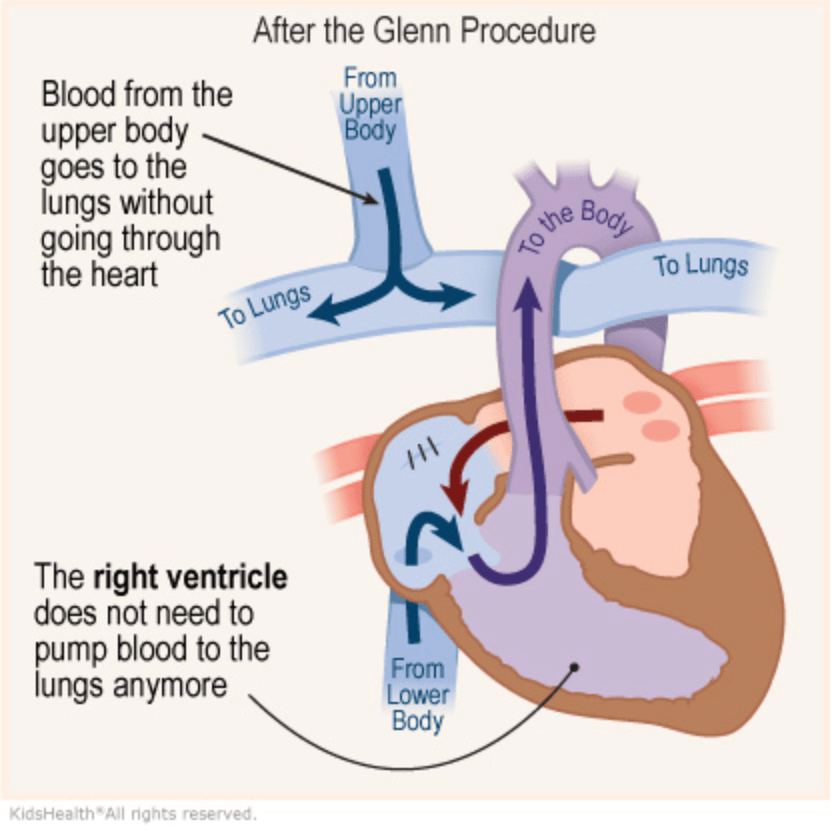
One issue that can come up after the Glenn surgery, which Theo underwent last summer, is the blood pressure in the new circulation can get too high. High pressure following the Glenn can indicate that the body is needing to work too hard to get blood to the lungs, which can cause the lower sats we were seeing. We found the images below from KidsHealth (https://kidshealth.org/en/parents/glenn.html) helpful in understanding Theo’s circulation before and after the Glenn procedure.
The takeaway is that Theo’s Glenn pressure is right where the doctors want it to be. Good blood flow to the left lung and low Glenn pressure are really important because they make Theo a good candidate for the Fontan surgery, which is the last of three interventions that single ventricle children typically undergo. As of now, Theo shouldn’t need any other interventions before having the Fontan done, which will be some time between the ages of 2 and 4.
Ruling out obstructed blood flow to the left lung and high Glenn pressure, Theo’s doctors came to the last suspect in this story for causing his low sats.
Collateral Blood Vessels
Sometimes children with a single ventricle can develop what are called “collateral blood vessels”, which are veins or arteries that are not typically present in children with normal hearts.
In Theo’s case, he had a moderately developed collateral blood vessel that was bringing deoxygenated blood to his heart instead of directly to his lungs for oxygen. This not insignificant amount of deoxygenated blood was then mixing in the heart with the oxygenated blood that came from Theo’s lungs, lowering the overall oxygen level of Theo’s blood and likely accounting for his low sats.
The doctors were able to block the collateral blood vessel this morning, which should now disappear on its own.
Next Steps
If all goes according to plan, the next 18 months or so will be similar to the last 12 — we’ll continue to monitor Theo’s progress and hopefully it’s pretty uneventful until it becomes time to have the Fontan surgery done.
As always, we’re so thankful for all of the thoughts, messages and support, which is helping our little warrior continue fighting strong.





 Two and Three Quarters Full